Solution direction
Crushing solutions
Start with feed condition, capacity and downstream requirements.
Learn more →Solutions
Explore process directions and project inputs. The 1–3 TPH page uses the PE150×250 reference; 5–10 TPH is a process discussion target. Final configuration and achievable output depend on the material and site conditions.
Solution directions
Solution direction
Start with feed condition, capacity and downstream requirements.
Learn more →Solution direction
Compare dry product routes with a separate hard-rock wet-processing example.
Explore the product routes →Solution direction
Explore a generic jaw, cone and triple-deck screen process illustration.
Explore the mobile process →Solution direction
Discuss target size and equipment direction.
Learn more →Solution direction
Connect stages from crushing to recovery and concentration.
Learn more →Solution direction
Share project inputs to identify a suitable discussion path.
Learn more →Sand & aggregate
The dry-route discussion below is separate from the hard-rock wet-processing example. The appropriate route is reviewed against the material, required products and site conditions.
Dry processing may split graded-stone products from a manufactured-sand route. Screening, oversize return, sand making, classification and dust collection are considered during design.
Product route
Discuss crushing and screening for the required stone fractions, with oversize return considered as part of the process.
Review the crushing discussion →Product route
Discuss sand making, classification and dust collection for the required sand product. This is a possible process direction, not an installed-plant case.
Review screening inputs →Share rock type, feed size, required product fractions, capacity target, power supply and dust or site constraints. Final fractions, equipment and achievable throughput depend on the rock and required products.
A cone-crushing stage can be reviewed for further rock reduction. A sand-making stage is considered for the required sand grading or particle shape. Graded stone can leave the screening route as product while a separate stream is prepared for sand making.
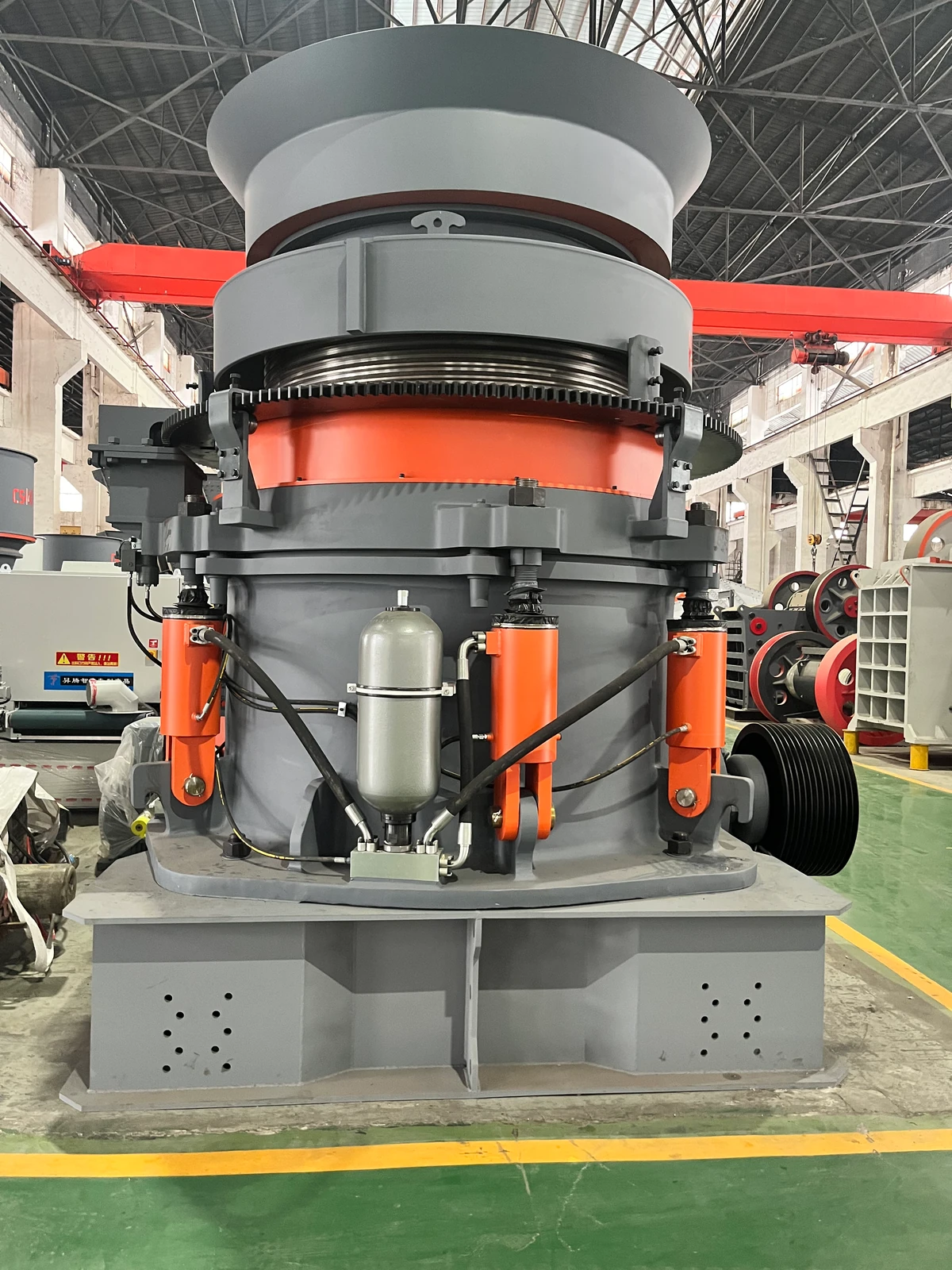
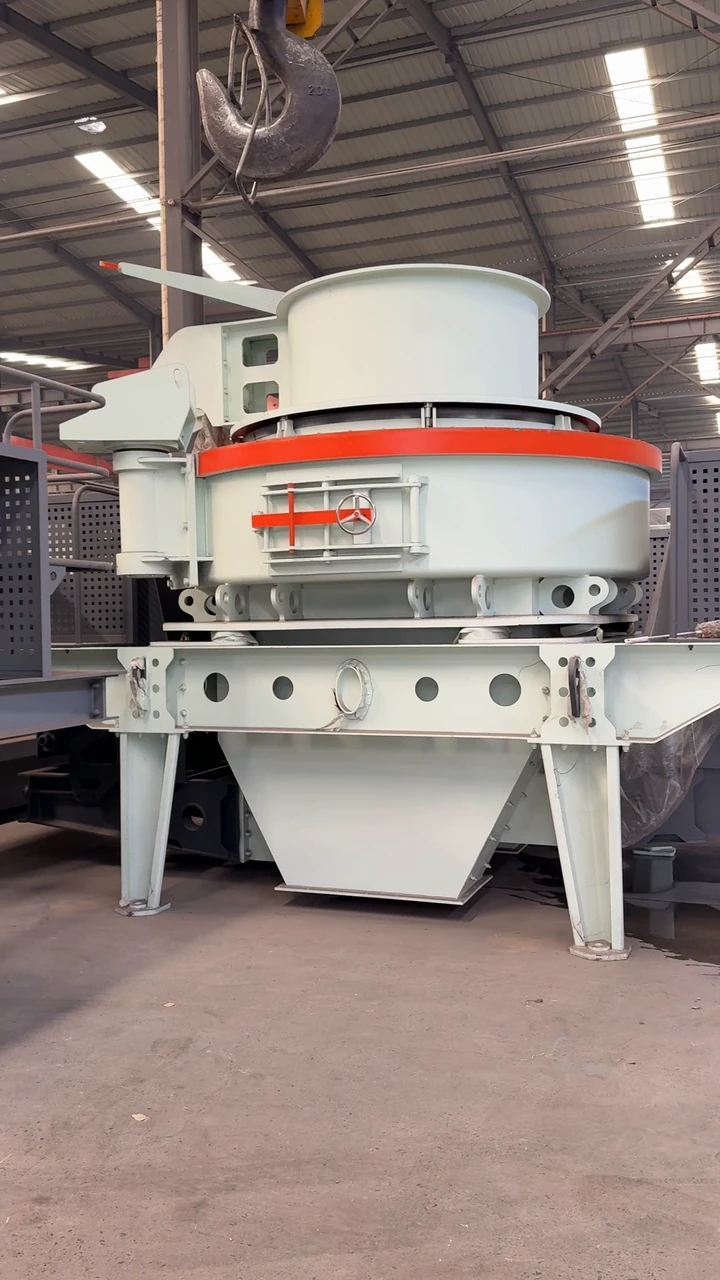
For a dry sand route, review classification and dust collection alongside crushing and screening. These separate equipment photographs support process discussion; final machine selection and circuit layout are confirmed for the material.
Separate wet-process example
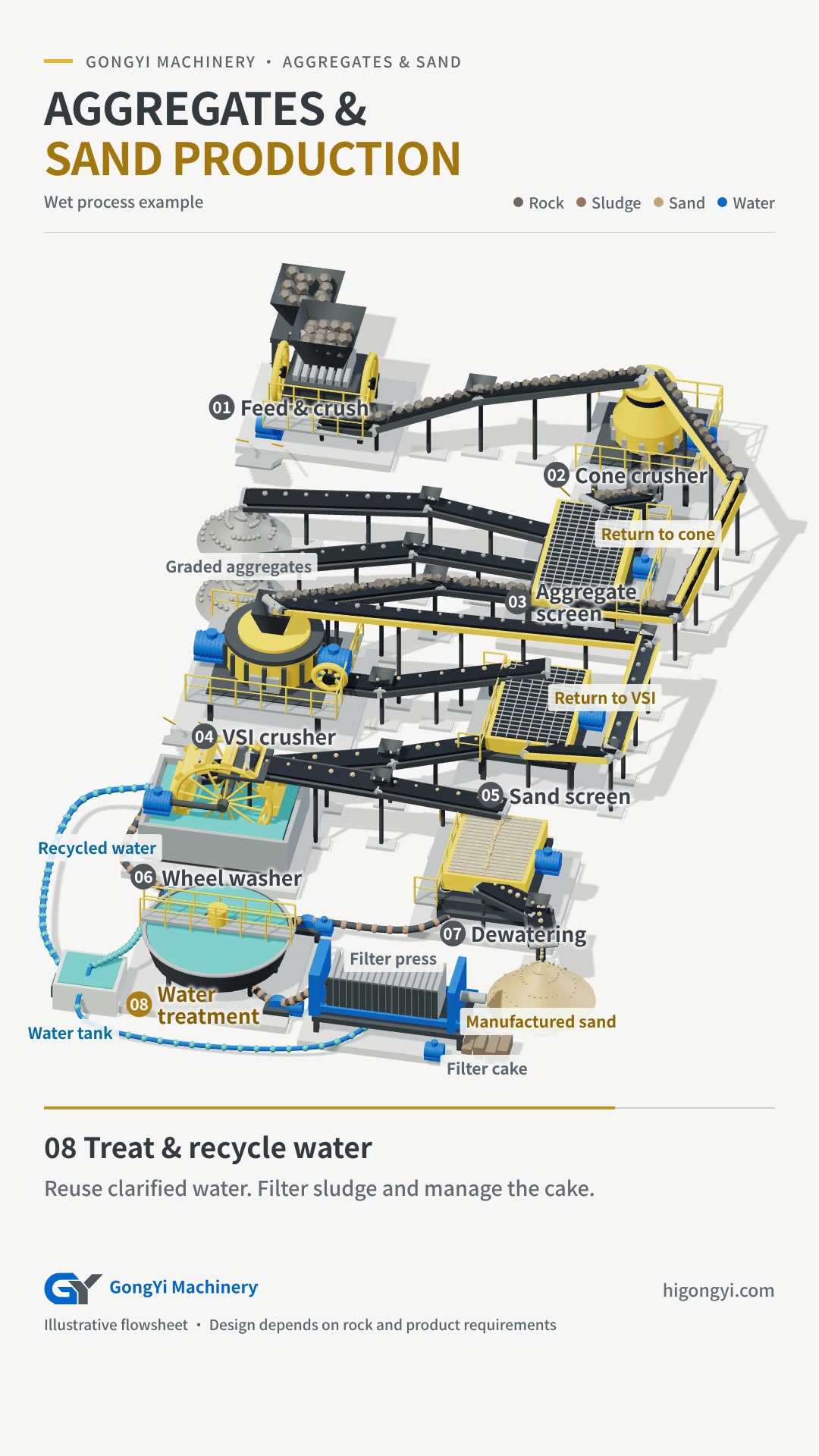
This animation shows a wet route for aggregates and manufactured sand. It is separate from the dry product-route discussion above.
Jaw and cone crushing feed an aggregate screen. Oversize returns to the cone crusher; graded aggregates leave as products.
A VSI crusher and sand screen form the sand-making route. Oversize returns to the VSI.
A bucket-wheel washer feeds sand for dewatering, followed by conveying to the sand stockpile.
A thickener clarifies process water. A filter press treats sludge, while clarified water is reused.
The wet example does not replace the dry route. Route selection and final configuration depend on the rock, product requirements and site conditions.
Prepare your project inputs →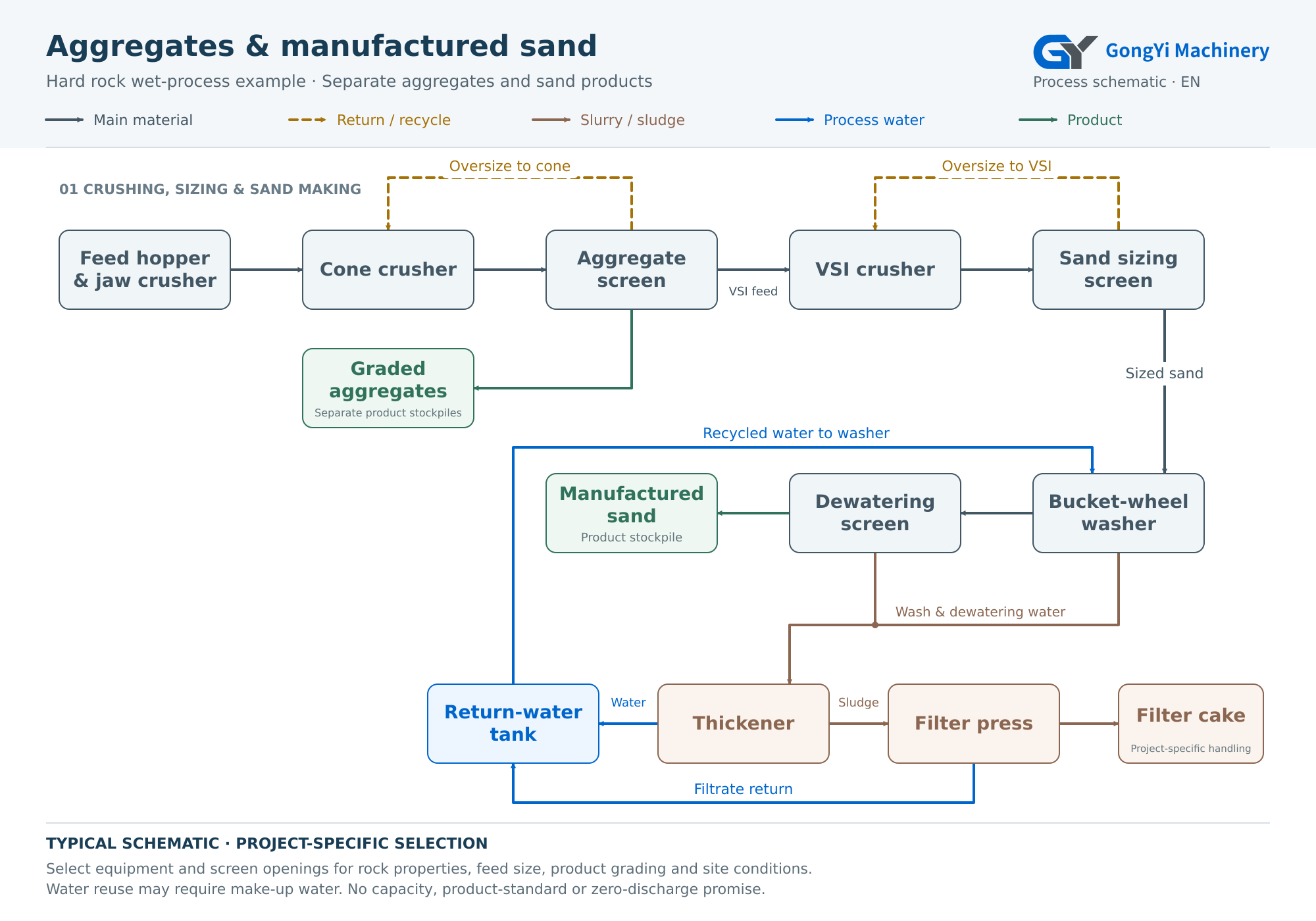
Mobile process example
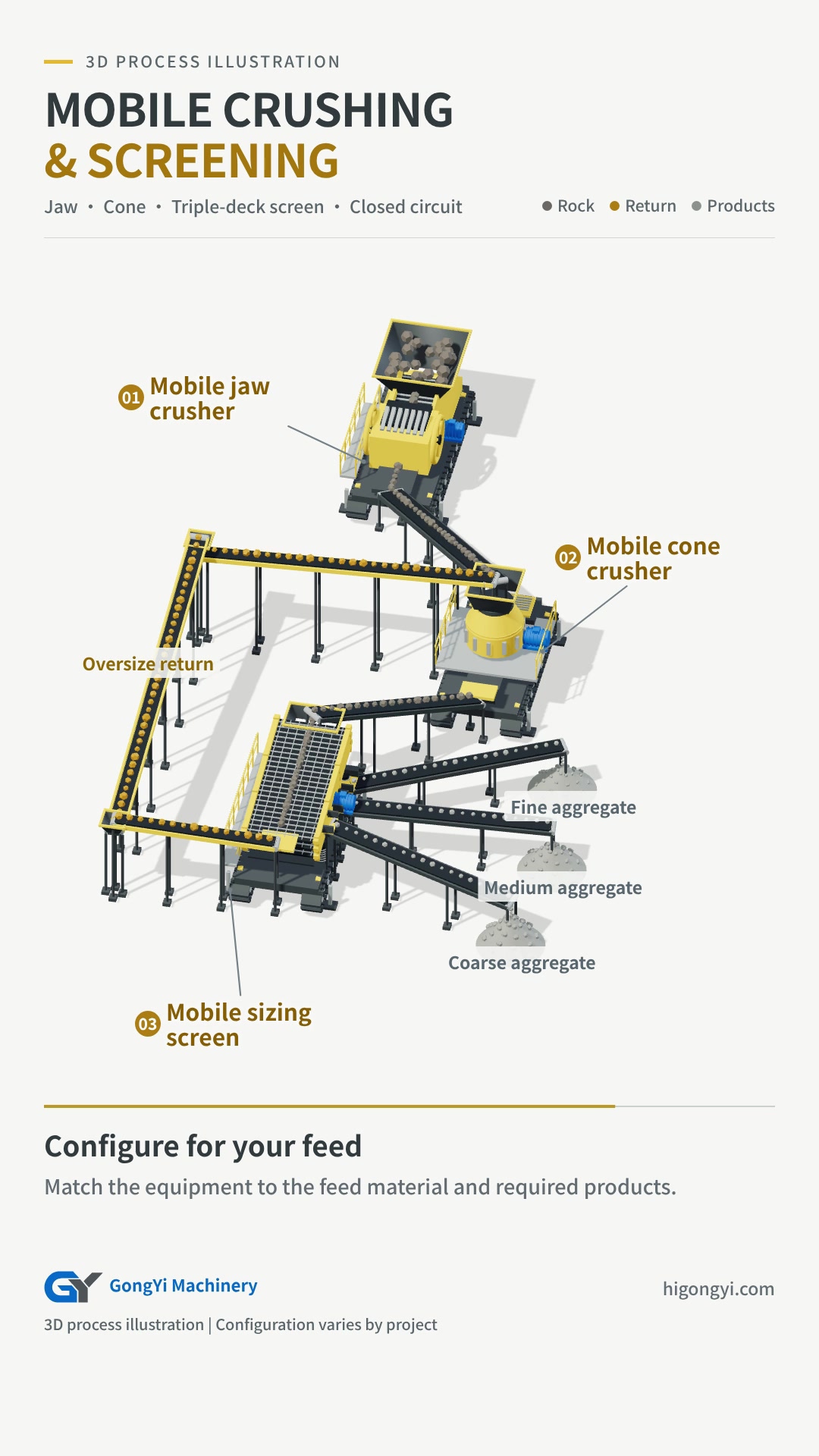
A tracked mobile jaw crusher, tracked mobile cone crusher and triple-deck mobile screen form this illustrated closed circuit.
The jaw crusher receives the feed and performs the first crushing stage.
Conveyors transfer material to the cone crusher for further reduction.
The triple-deck screen separates the material. Oversize returns to the cone crusher for another pass.
Three in-spec streams leave on separate conveyors and form separate stockpiles.
This is a generic two-stage crushing illustration. Final configuration depends on feed and product requirements.
Prepare your project inputs →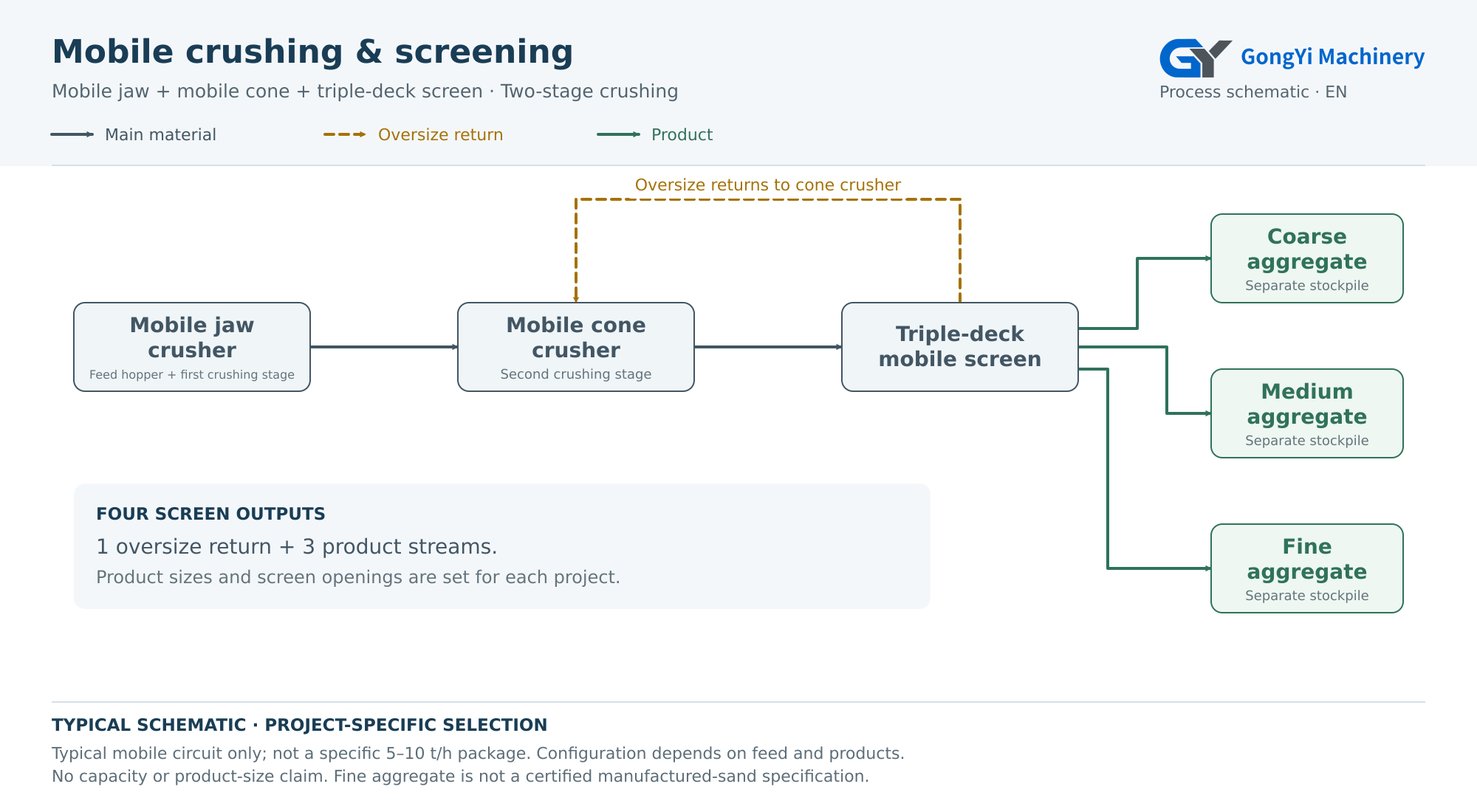
Solution
A verified PE150×250 reference direction.
Learn more →Solution
A solution-level process discussion.
Learn more →Solution
Connect crushing, grinding and recovery stages.
Learn more →Real equipment references
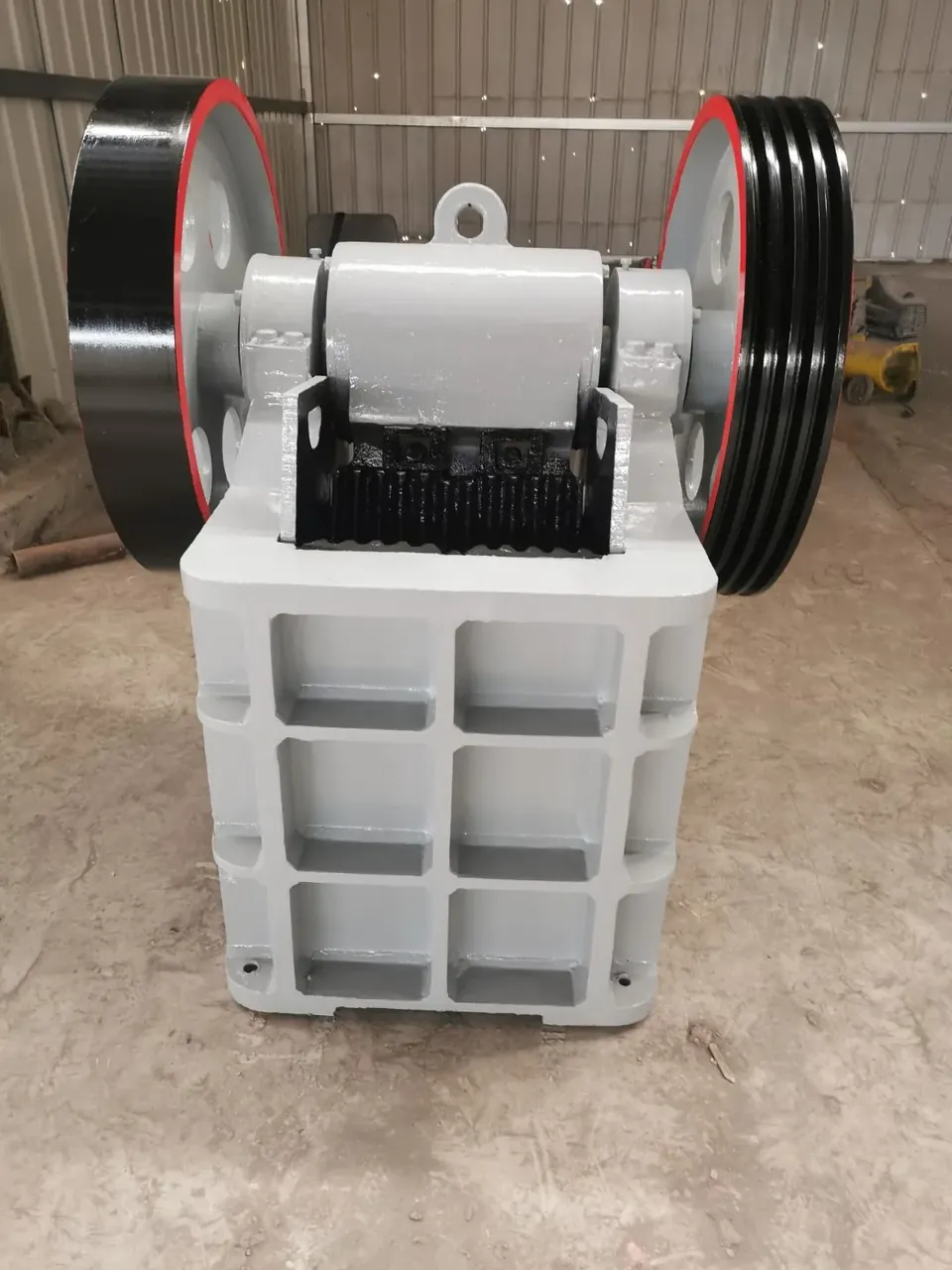
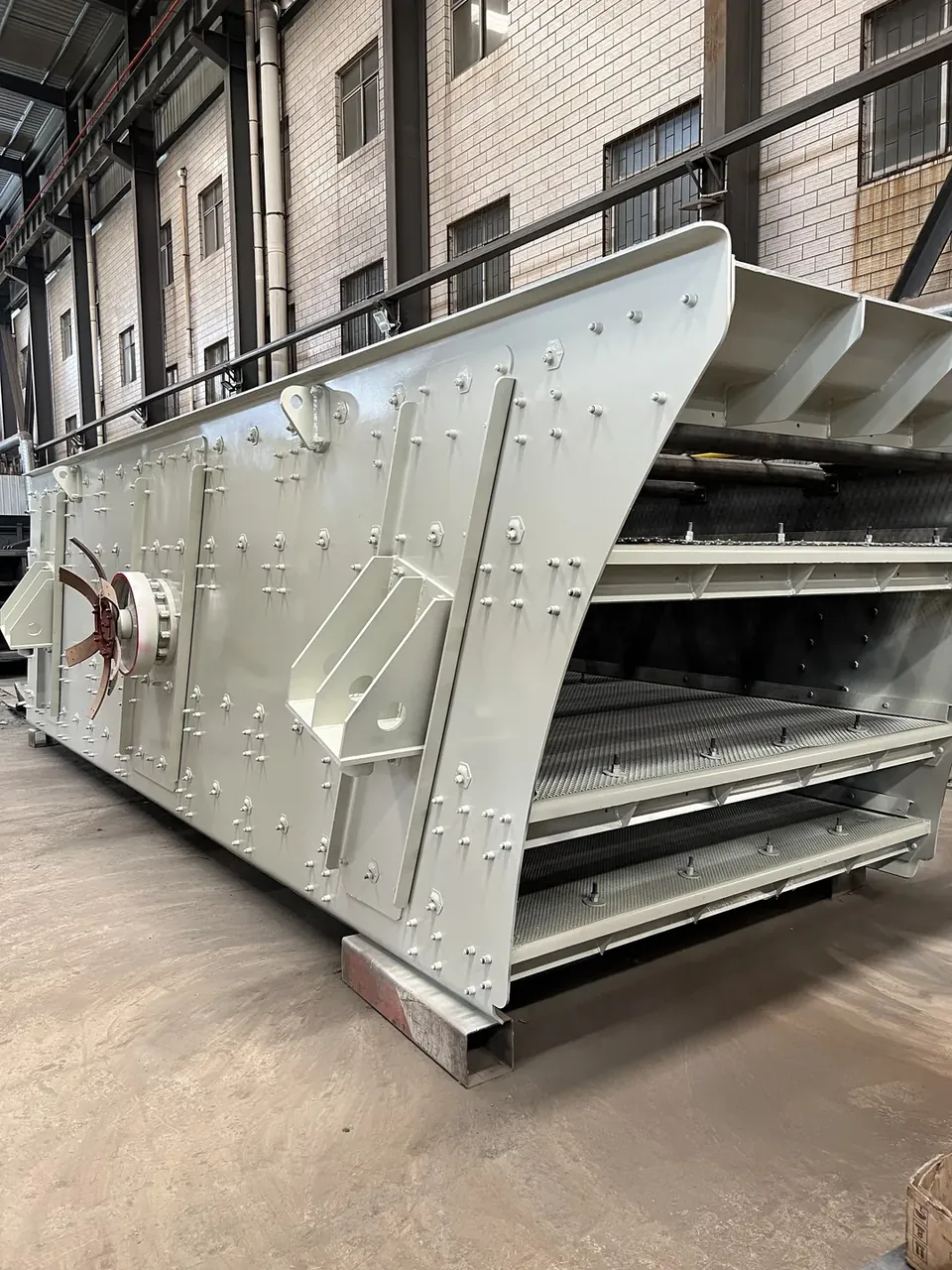
For dry stone and manufactured-sand projects, discuss the graded-stone stream and the sand-making stream separately. These photographs show a jaw crusher and a screen; the sand-making equipment is selected after material and product requirements are reviewed.
Inquiry support
Send material, feed size, required capacity and power supply to begin a focused equipment conversation.